August 2004

The Westland & Yeovil District Newletter
From the editor
Well what can I say. I could make plenty of week escuses and say I
haven’t had time, and I would probably get the verbal abuse I deserve.
The truth is I have been very busy at work and home, but you don’t want
to hear all about that.
I have managed to put a few articles together and I can only apologise
for a very sporadic newsletter.
Regards
Mark Pope.
Merriott Flying site
Those of you who have been attending the site and / or monthly meeting
will know that the Club has become famous having articles in Crewkerne edition
of the Western Gazette both before and after the District Planning meeting
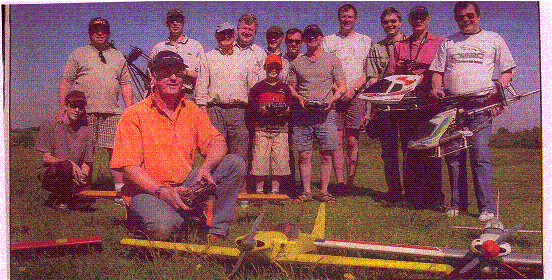
The outcome of the District Council was to give us one year temporary
planning permission subject to suitable access to the site being agreed with
the Highway department.
Martin Surrey and Ted Saddler to the rescue. Martin and Ted kindly volunteered, at a club
meeting, to help with this issue and have been co-opted to assist the
committee..
They have visited the Highways department and it has been recommended
that the club put a new access into the field approx 30 yards down the lane.
Martin is finding out costs etc.
===========================================================
Thunder
Tiger e-Hawk (Kit review)
Having
spent many years slope and flat field gliding I recently decided to try
electric powered flying and as a result thought that the best way forward would
be a simple aircraft and associated power source.
Suspended in the `Hobby Hanger` was a Thunder Tiger e-Hawk of 1.4 m span,
which looked as if it would fit the bill being almost ready, built and
featuring ailerons and a vee tail arranged as elevator only. The motor is a
basic 380 type with a folding prop.
In the January issue of ‘Quiet & Electric Flight’, John Whitehead reviewed
the Hawk. This covers the building and flying in a detailed way and with which
I agree.
However like most
modellers changes from the plan seem to be required at times based on ones own
experience. In my case to minimise on cost I utilised two Futaba S3101 servos
which really are too big for the space available as it was for the `Dual
Conversion RX R138df. As I already had these to hand I altered the necessary
parts to allow them to fit.
A few points may be of
interest for anyone purchasing this model. I have made the following changes
from the kit instructions: -
Do not fix the
elevator/battery tray until you get to the point of checking the C of G. Two
`self-tapping` fasteners secure the wings, which is inadequate for long-term
use. I have used two M3 fasteners and a nut plate cemented in the Fuzz.
Before joining the wings
together mask the two holes in the first rib each side. This will prevent dust
and debris passing along the whole length of the wing.
The canopy can be fixed
by means of one fastener at the front as per plan. Slot the canopy at the front
and use a circle of `Velcro` at the rear edge.
After some curious
electrical gremlins causing the servos to glitch and resulting in a `Navy` type
landing, the flying characteristics are proving very pleasant and
I am looking forward to the better weather to arrive.
George Chambers. February
2004.
Solo
success
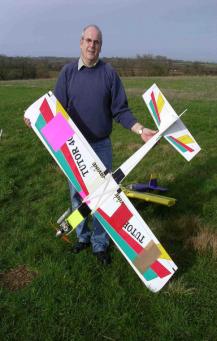
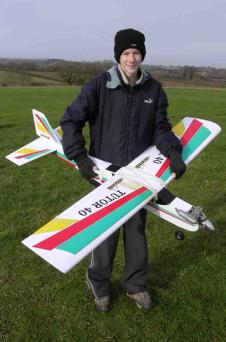
Earlier in the
year, when the weather was not as nice, 2 of our club members successfully
passed the BMFA ‘A’ Test.
Congratulations to
Daniel Jones and Bob Butler
‘Too ‘B’ or not too ’B’
As you will all know I am great supporter of training and getting our entire club members to a level of competence. To see the look of delight on the faces of students passing there ‘A’ certificate is great!
For those of you more competent pilots
there’s more, the ‘B’ certificate, this is the required standard to fly at
displays. It is also the club requirement for instructors.
I know from the
standard of flying from some of my fellow club mates that there are some more
potential ‘B’ standard fliers
Please don’t be
frightened by the test, just practice those skills and brush up on the safety
questions (don’t forget to read your local site rules).
For notes and
guidance talk to any of our club examiners (Listed below) and / or visit the
BMFA web site
Examiners: - John
Stevens, Dave Cossins, Dave Coates, and Ray Bowden.
Thanks all who
spend their time instructing (and examining)
Mark Pope
Just for fun
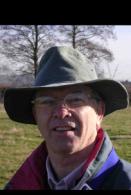
Answers to ‘who’s Hat? – Last
Newsletter.
No Prizes for this one, but did you
know who’s hats they were?
|
|
|
|
|
|
A |
B |
C |
D |
|
|
|
|
|
|
E |
F |
G |
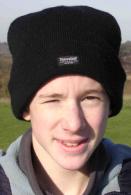
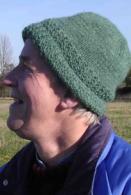
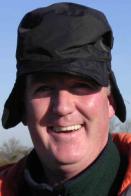



|
A |
Clive
Date |
|
B |
Dan
Jones |
|
C |
Dave
Cossins |
|
D |
Mark
Pope |
|
E |
Robin
Suanders – Sorry about the poor image |
|
F |
Ted
Saddler |
|
G |
Tim
Austin |
GUIDE LINES FOR CLUB FLYING
These are not the full set of rules but contain the most relevant sections for safe operation of both fields.
A complete set of guidelines can be obtained from ‘The Treasurer’ or myself (Mark Pope).
RULES OF CONDUCT
In order to preserve
our continued enjoyment of the hobby, and this includes as not the least
consideration the use of the airfield, it is necessary to have certain rules of
conduct to: -
Maintain safe operation
Avoid nuisance to the general public
Avoid inconvenience to each other
SAFETY
The main aspects of
safety are contained in the BMFA Safety Code, which everyone in the Club should
ensure that they are familiar with (as they will receive these as Association
members,) in addition there are some specific local rules.
Site the pits so
that they are clear of the flight path of models taking off and landing.
Keep models, boxes
etc. well back from the edge of the patch. The pegboard should be about 3 paces
from the edge of the patch and the models should be at least 8 paces behind the
pegboard.
After take off,
clear the patch as soon as possible to avoid obstructing those wishing to land
or take off.
Always call before
taking off or landing and make sure that you are given the OK before you
proceed. Also call your intention to go onto the patch to retrieve a model,
clearing the patch and calling “clear” as soon as possible.
Do not carry out
engine test running close to the patch as this drowns the sound of models in
the air.
Keep an eye on other
models when flying, and always check that the patch is clear before landing,
even if you have called landing.
Observe the “No Fly”
areas as shown in the attached maps Figs 1 & 2
Keep a good lookout
for full sized aircraft, even when the airfield is nominally closed.
=======================================================================
CLUB
RULES FOR CARING FOR CHILDREN AND VULNERABLE ADULTS
See Club
Guide lines for details
================================================================
CLUB NOISE LIMITATION POLICY
The club has a Noise
Limitation Policy, this is to protect us against the possibility of loss of
flying facilities as a consequence of noise complaints from local residents,
and in order to pursue a “good neighbour” policy.
The policy operates
in three ways: -
Limiting noise from
individual powered models.
Limiting noise by
limiting the number of powered models flying at the same time.
Limiting the times
when we operate powered models.
1.INDIVIDUAL MODELS
All models operated
by club members and their guests must be effectively silenced and must conform
to the current DOE/BMFA code of practice, i.e. noise level not to exceed 82 dBA
measured at 7 metres from the model in four directions at right angles. The
club has a noise meter and models will have a certificate of compliance issued
after measurement.
2.NUMBER OF MODELS
We limit the number
of powered fixed wing models operating at the same time to four.
3.LIMITING FLYING TIMES
See rules for relevant flying site.
======================================================================
SILENT FLIGHT
Silent flight may be
flown on the airfield on any evening and on Sundays subject to the rules of
Airfield Operation, and at any time on the Merriott field.
The noise policy has
been discussed with the environmental health officer and has had his approval
as being a reasonable code of conduct.
================================================================
TRAINING SCHEME
Introduction
A major aim of our
model aero club is to promote the hobby and sport. It is therefore imperative,
that all members understand the safety implications in both the operation and
flight of model aircraft. The training scheme is intended to introduce
newcomers to the hobby to these skills and to ensure that they reach a
recognised standard of proficiency.
The Scheme
The scheme is based
on the BMFA training scheme “Up and Away” and the BMFA proficiency scheme; Club
approved instructors operate it
Any member who has
not achieved the BMFA “”A” proficiency level may only fly when supervised by a
club approved instructor.
The instructors will
monitor the progress of the pupils with a view to their successful achievement
of the BMFA “A” standard of proficiency.
A list of names and contact numbers of club-approved instructors will be available in the club hut and will be provided to new members on joining.
=======================================================================
RULES & PROCEDURES - YEOVIL AERODROME
1. If the Air Traffic Control centre is closed.
When there is no full size flying in progress the Air Traffic Control centre is closed, and model flying is permitted.
2. If the Air
Traffic Control centre is open.
When there is full size flying in progress, model flying may be permitted with the agreement of Air Traffic Control in certain circumstances, this is only likely to occur when full the size flying is away from the Airfield.
When model flying is permitted by Air Traffic Control when full size is in progress the following procedures, which have been agreed by Air Traffic Control will be observed.
The first person who is on a list of nominated persons to arrive at the Main Gate, will contact Air Traffic Control on Ext. 3051 and ask for permission to start model flying.
If permission is given, the modeller who contacted Air Traffic Control first must arrange for the telephone in the club hut to be continuously manned while model flying is in progress (the extension lead for the telephone may be used to make this easier.)
When instructed by Air Traffic Control by phone, all models must land immediately, and wait for clearance before commencing flying again.
A good lookout must be maintained at all times in case an aircraft returns unexpectedly.
RULES FOR HELICOPTER OPERATION ON THE AIRFIELD.
1. Models should meet the required safety
level as stated in the BMFA Operation Guide to Helicopters.
Models should be
started in the pits and carried out to a safe distance from the pits
(approximately 20-ft.)
After test hovering
the model should be carried out to the mown area and the flight continued from
there.
After flight check
the model over for loose or failed components, as per the BMFA Operation Guide
to Helicopters.
Due to the frequency
allocation for the Helicopter section (55 to 63 inclusive), there is no need to
restrict the number of models in the air at a time, although for safety reasons
only two models should fly circuits at the same time.
During flights, the
model should not leave the boundaries of the airfield. Never overfly the pits
or buildings on the site, and keep a lookout for Aircraft to avoid the danger
of collisions.
FLYING TIMES – Yeovil Westland Airfield
Flying times on the
airfield for models powered by internal combustion engines are limited to: -
Saturday afternoons
and Bank Holidays – noon to sunset *
Wednesday evenings –
1800 hrs to sunset* in the Summer
Monday evenings
–1800 hrs to sunset* models with noise levels of 78 dBA or less
A limited number of
Sundays e.g. Wessex Scale days.
*Evening flying is
to cease by 2030 hrs, or sunset, whichever is earlier
Silent flight may be
flown on the airfield on any evening and on Sundays subject to the rules of
Airfield
RULES & PROCEDURES MERRIOTT FIELD
Members using the field must be prepared to show their current Club membership card and BMFA card if asked to by the landowner. Anyone not doing so will be asked to leave the field.
Anyone asked to stop flying by the landowner is to comply immediately and without question.
Parking of member’s cars is to be kept to close the hedges by the entrance, park so as not to obstruct access.
Cars are not to be driven to the flying patch.
No Fly areas for the field are the A356 road and the market garden to the southwest, which is the residence of the landowner.
The existing club rules regarding safety, noise reduction and non “A” certificate holders will apply to this site as well as any other sites used by the Club.
Exercising of dogs or other animals is not permitted.
FLYING TIMES
- Merroitt
Power flying may
take place on:-
Tuesday 12:00p.m until 20:00
hrs, or sunset, whichever is earlier
Friday 12:00p.m until 20:00
hrs, or sunset, whichever is earlier
Sunday 10:00a.m
until 16:00 hrs
(These times are subject to review from time to time.)
Helicopter Training
(Hover only)
Wednesday 12:00p.m until 20:00 hrs,
or sunset, whichever is earlier - hover training only
(These times are subject to review from time to time.)
Silent flight may take place at all times.
Fig 1 Merriott Field No Fly Areas
Poly
tunnels & buildings


 Noise
abatement No Fly Area
Noise
abatement No Fly Area 
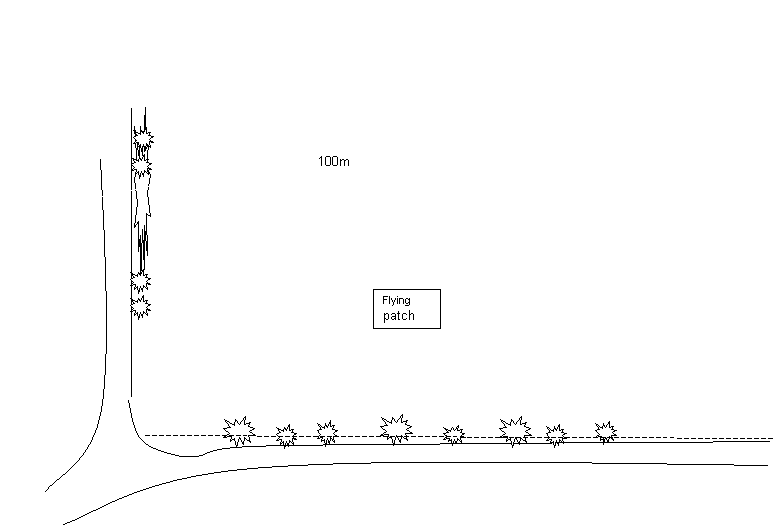
Fig 2 Yeovil Airfield No Fly Areas

 Normal Flying Area
No Fly Area Flying patch

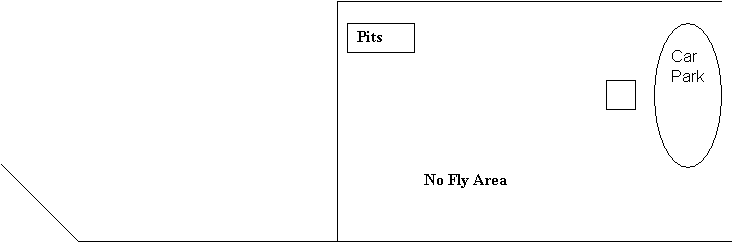
No Fly Area

The last bit
If any of you have anything interesting, amusing or
informative that youu would like to share in the newsletter please send it to
me, by e-mail is great, but if not pass it to me at a club night or on the
field.
You can contact me on 01935 862562
Or e-mail mark@pope2000.fsnet.co.uk
Note Club nights 4th Tuesday of everymonth
(except December)
8:00 in the watercombe suite, Westland Liesure
Complex. (meet in the sportsman bar for a drink before)
===================================================================
FOR SALE :-
For those of you that enjoy all wood construction I have a new 1/5 scale
(3.2 m) model glider kit by `Lenger Modellbau` of the Schleicher ASK 13 two
seat trainer. The instructions are in German but have photos to help. This was
bought at the Dortmund Trade Fair last year but now
required. £50-00
George Chambers (01935823463)
FOR SALE:-
Algebra 2.5 m slope soarer. Bit sorry looking in places but still a great
slope plane. £10-00 (G.C.)
George Chambers (01935823463)
Sorry Gorge for the late edition of this news letter